
VISIT PARC GÜELL IN BARCELONA
Entering Parc Güell in Barcelona means stepping into a place where fantasy, architecture and nature seem to blend together at every turn. Located on the hills overlooking the city, the park was designed by Antoni Gaudí in the early 20th century and remains one of the most original examples of his distinctive style. From the very first steps, visitors are surrounded by a unique atmosphere, far removed from the busy pace of central Barcelona. Straight lines give way to curved, flowing and irregular shapes, while greenery, pine trees and birdsong accompany you along paths that naturally follow the contours of the hill.
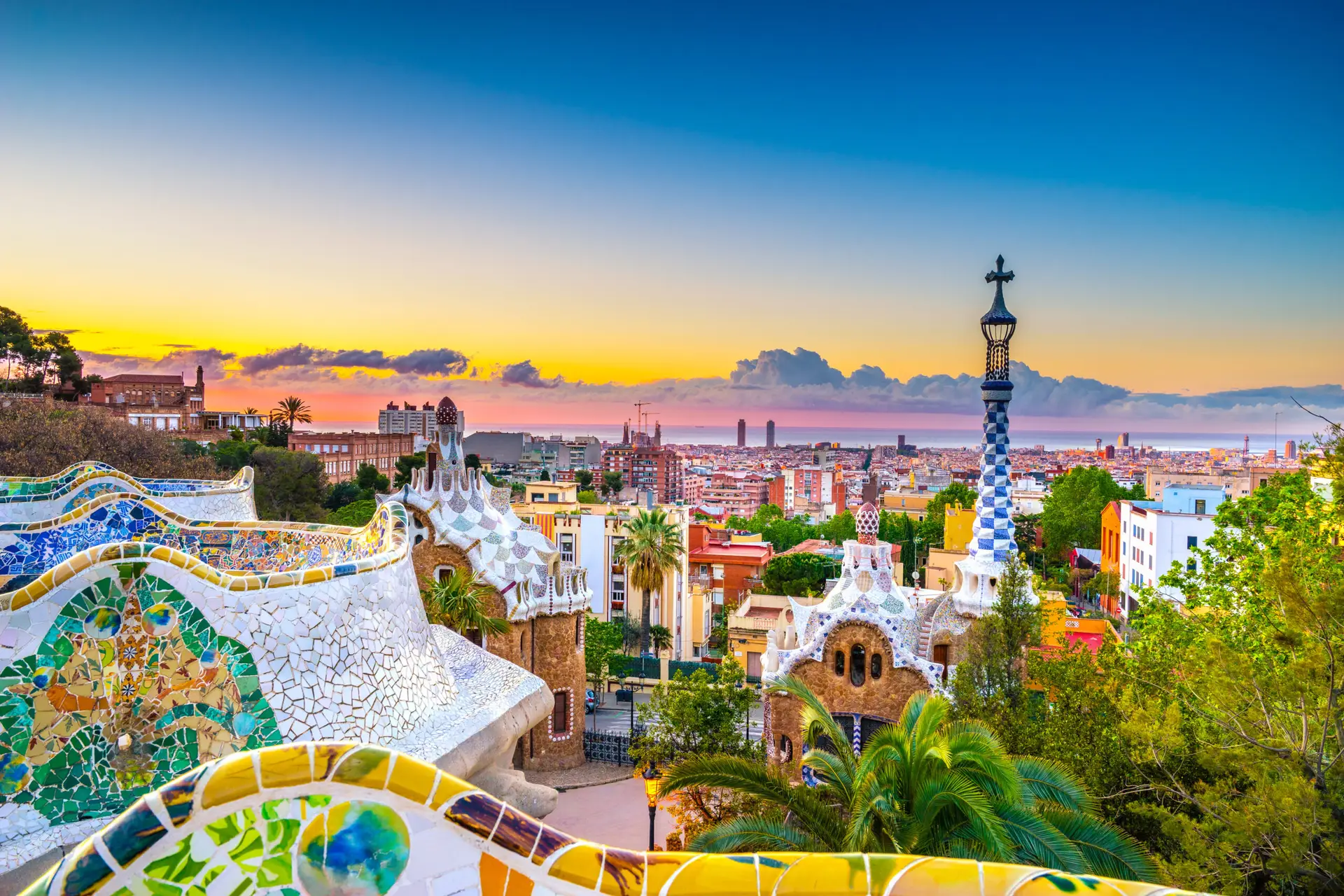
One of the first areas to capture your attention is the monumental entrance. Here, two fairytale-like buildings stand out with their wavy roofs and surfaces decorated with brightly coloured ceramics. Their architecture almost looks handmade, with soft and unusual shapes that appear different depending on the light. Just beyond them is the grand monumental staircase, one of the most photographed spots in the park. At its centre sits the famous mosaic-covered salamander, also known as the Parc Güell dragon. Yellow, blue, green and red ceramic fragments come together in a vibrant design that immediately draws the eye.
Climbing the staircase leads to the Hypostyle Room, also known as the Hall of a Hundred Columns. This large covered space is supported by impressive columns that resemble a stone forest. Light filters between the architectural elements, creating different effects throughout the day. The space feels both imposing and peaceful, offering a quiet moment before continuing towards the park’s panoramic areas.
One of the most striking places in Parc Güell is undoubtedly the large panoramic terrace. From here, the view stretches across Barcelona towards the Mediterranean, taking in neighbourhoods, rooftops, streets and the blue horizon. Running along part of the terrace is the famous serpentine bench, with its long curved shape covered in colourful mosaics. Designed to follow the shape of the human body, it provides a comfortable place to sit while admiring the city from above. Up close, you can spot countless details created from pieces of ceramics, plates and tiles arranged into geometric, floral and abstract patterns.
As the visit continues, the landscape becomes greener and more natural. Paths wind through trees, shrubs and typical Mediterranean vegetation, following the natural slopes of the terrain. Gaudí designed the park to integrate its structures into the hillside, avoiding a clear separation between architecture and landscape. This idea is especially noticeable in the viaducts and stone passageways, supported by sloping columns that appear to emerge directly from the rock. Walking beneath them can feel like entering a natural cave or an ancient shelter carved into the mountain.
It is precisely this constant fusion of man-made and natural elements that makes Parc Güell so distinctive. Around every corner there is something new to discover, from organically shaped columns and unusual seating to colourful decorations and structures inspired by plants and animals. The park encourages visitors to explore slowly and enjoy it from different perspectives. Families, artists, photographers and travellers move along the paths looking for the most interesting viewpoints, creating an atmosphere that is lively yet relaxing.
By the end of the visit, Parc Güell often feels like much more than an ordinary park. It is a place where art, nature and architecture coexist in the open air, transforming a Barcelona hillside into a highly imaginative setting. Exploring it offers a deeper understanding of Gaudí’s ability to use shapes, materials and colours to create spaces that surprise and inspire. More than just one of Barcelona’s landmarks, Parc Güell offers a completely different way to experience Barcelona and Modernist architecture.
WHAT TO SEE IN BARCELONA PARC GÜELL
Parc Güell in Barcelona is one of the city’s most iconic attractions and one of the best places to experience Antoni Gaudí’s unmistakable architectural style. Built on Carmel Hill, the park combines Modernist architecture, nature, colour and impressive panoramic views, making it one of the essential places to include in a Barcelona itinerary.
The history of Parc Güell began in the early 20th century, when businessman Eusebi Güell commissioned Gaudí to create an ambitious residential development. The original plan was to build an exclusive residential area surrounded by greenery and inspired by the garden city concept. However, the project did not achieve the expected success and was gradually abandoned. The site later became property of the City of Barcelona and was transformed into a public park, eventually becoming one of the city’s most visited attractions.
One of the features that makes Parc Güell so fascinating is the constant connection between architecture and landscape. Gaudí’s structures do not simply sit within the park but seem to form part of nature itself. Trees, Mediterranean plants, irregular paths and stone structures blend together harmoniously, creating a peaceful environment that is ideal for exploring away from Barcelona’s busiest areas.
One of the park’s most famous sights is the mosaic salamander, also known as the Parc Güell Dragon. Located on the monumental staircase, it is covered with colourful ceramic fragments created using the trencadís technique, one of the most recognisable decorative features of Gaudí’s work. Its irregular shapes and vibrant colours have made the sculpture one of the most photographed symbols of both Parc Güell and Barcelona.
The viaducts and walkways are also not to be missed. They were designed to adapt naturally to the shape of the hillside. Their solid stone columns, often slanted and formed with organic lines, resemble tree trunks, caves and natural rock formations. Walking through these passages makes Gaudí’s intention to blur the boundary between architecture and nature especially clear.
Higher up in the park is the Turó de les Tres Creus, known for the three crosses standing at its panoramic viewpoint. From here, visitors can admire Barcelona from above and appreciate Parc Güell’s privileged position on the hill.
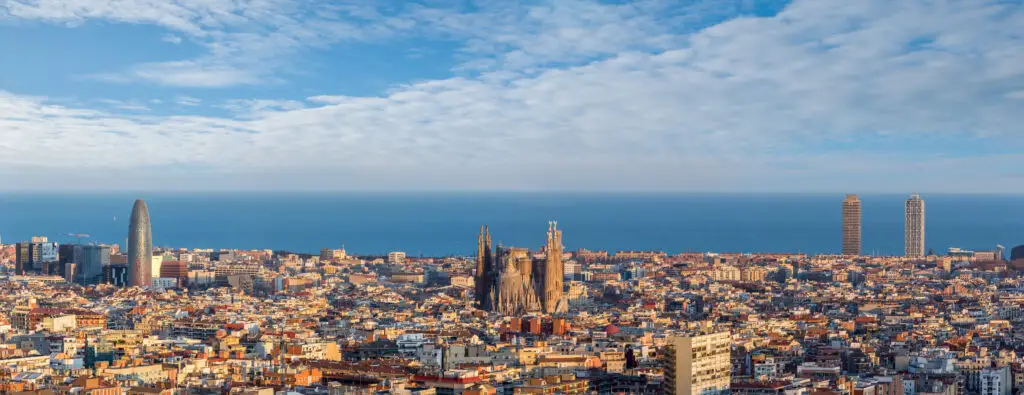
Another highlight is the famous panoramic terrace. From here, views stretch across the city and, on clear days, all the way to the Mediterranean Sea. The Sagrada Família can also be spotted in the distance. The large curved bench covered in colourful mosaics makes the terrace even more distinctive and provides the perfect place to stop for a few minutes and enjoy the scenery.
Visiting Parc Güell in Barcelona therefore means discovering much more than a simple green space. The park expresses Gaudí’s creativity through unusual forms, colours, symbols and architectural solutions that constantly interact with nature. Every section offers something different to observe and reveals another side of Barcelona’s artistic identity.
Barcelona itself is deeply connected to the legacy of Antoni Gaudí. His works helped shape the appearance of the Catalan capital and remain among its best-known landmarks today. Walking through the city means coming across buildings with flowing lines, surprising façades, colourful mosaics and details inspired by the natural world.
Parc Güell is one of the clearest examples of this vision. Here, architecture moves beyond traditional buildings and becomes part of the surrounding landscape, creating a place where art and nature coexist in an original way. For anyone who wants to understand Gaudí’s creativity and discover one of Barcelona’s most distinctive attractions, Parc Güell is an essential stop.
Passes and Bundles
Useful info
Opening hours
Parc Güell is open every day, although opening times may change depending on the season. It is always best to check the time shown on your ticket before visiting, especially during holidays or special events.
Location
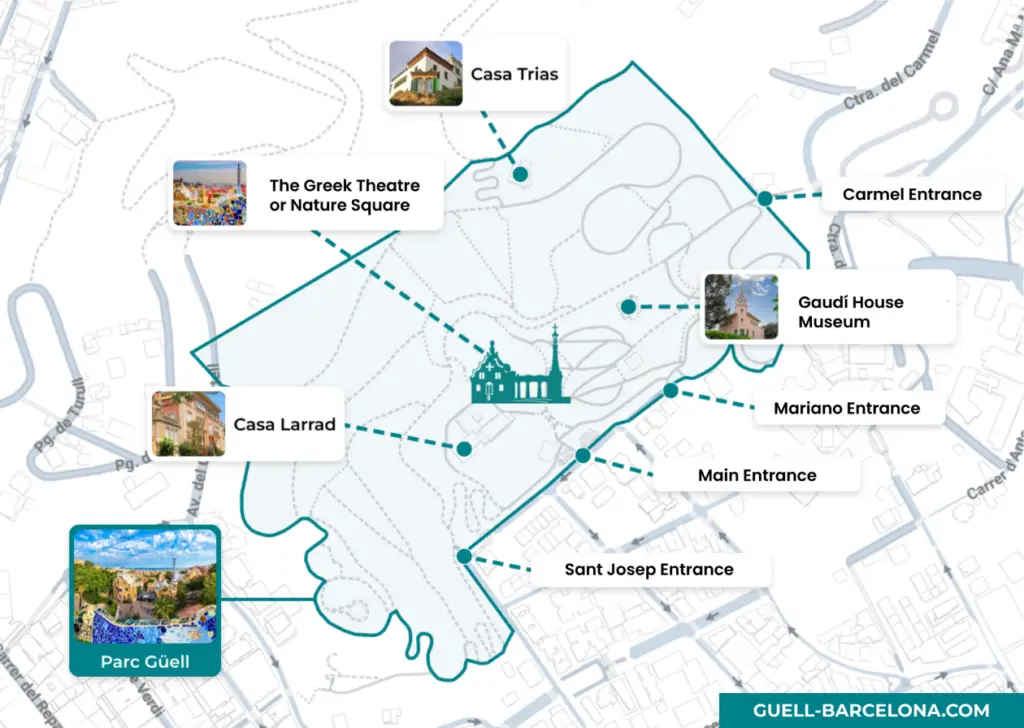
Parc Güell is located on Carmel Hill in the Gràcia district of Barcelona. Its elevated position offers beautiful views over the city and makes it one of the most scenic attractions in Barcelona.
How to get there
You can reach Parc Güell by metro, bus or taxi. Lesseps and Vallcarca are among the most commonly used metro stations, but both require some walking, including uphill sections.
Best time to visit
The best time to visit Parc Güell is usually early in the morning or late in the afternoon, when the park is generally quieter. Spring and early autumn are especially pleasant thanks to milder temperatures and good daylight.
Duration of the visit
Most visitors spend around 1.5 to 2 hours exploring Parc Güell. If you want to take your time, enjoy the viewpoints or walk through the quieter areas, you may want to allow a little longer.
Accessibility
Some areas of Parc Güell are accessible to visitors with reduced mobility, although steep slopes, stairs and uneven paths can make certain sections more difficult. More accessible routes are available within the park.
Opening hours
Parc Güell is open every day, although opening times may change depending on the season. It is always best to check the time shown on your ticket before visiting, especially during holidays or special events.
Location
Parc Güell is located on Carmel Hill in the Gràcia district of Barcelona. Its elevated position offers beautiful views over the city and makes it one of the most scenic attractions in Barcelona.
How to get there
You can reach Parc Güell by metro, bus or taxi. Lesseps and Vallcarca are among the most commonly used metro stations, but both require some walking, including uphill sections.
Best time to visit
The best time to visit Parc Güell is usually early in the morning or late in the afternoon, when the park is generally quieter. Spring and early autumn are especially pleasant thanks to milder temperatures and good daylight.
Duration of the visit
Most visitors spend around 1.5 to 2 hours exploring Parc Güell. If you want to take your time, enjoy the viewpoints or walk through the quieter areas, you may want to allow a little longer.
Accessibility
Some areas of Parc Güell are accessible to visitors with reduced mobility, although steep slopes, stairs and uneven paths can make certain sections more difficult. More accessible routes are available within the park.
PARC GÜELL MAP